Gies Business professor Marcelo Bucheli, a leading expert on the banana industry, traces how the Cavendish became a global staple through United Fruit’s supply chain, marketing, and political influence in Latin America. Now Tropical Race 4 threatens the genetically uniform Cavendish worldwide.

If you live in North America or Europe, there’s a distinct possibility that you’ve only eaten one variety of bananas your entire life. Since the 1950s, the Cavendish has been the dominant strain served in most breakfast bowls and schoolyard lunches north of the equator. But now, the golden treat is being stalked by a virulent fungal disease threatening to wipe it from the face of the earth. And we know it could happen. Because it’s happened once before.
The impending banana crisis was recently the focus Stuff Matters, a British podcast that delved deep into the topic. The result is a very English tale about a very tropical fruit. And to make sure they got it right, they turned to an expert at one of America’s top business schools.
Few know the story of the banana better than Gies College of Business professor Marcelo Bucheli. Over the past two decades, Bucheli has earned international recognition for influential research examining how businesses navigate political and institutional change. He also happens to be one of the world’s leading experts on the banana industry. Over the years, he’s published many books and articles on the topic, including “Bananas and Business: The United Fruit Company in Colombia, 1899-2000,” which grew out of his PhD dissertation at Stanford University. In short, he knows a bunch about bananas, including how they became one of America’s most nutritious sweets.
“The very first bananas arriving in the United States were imported in the 1870s,” said Bucheli.
At the time, they were reserved for wealthy guests staying at luxury hotels. And it’s possible they would have remained a niche item, if it weren’t for the efforts of a company that turned the elite treat into one of the cheapest items available in your neighborhood grocery store.
That company was United Fruit. And Bucheli, who was born in Venezuela, spent much of his formative years in its shadow. So, it’s only natural that he would become fascinated by the firm whose aggressive business model soon became a template for global enterprise.
Building the global banana business
In the 19th century, bananas were a tough business. “Between 1870 and 1899, different people created 144 banana companies, and only 22 survived,” said Bucheli. One of those was the Boston Fruit Company, led by Andrew Preston and Lorenzo Dow Baker, whose vast fleet of steamships brought a steady supply of bananas to America’s shores. But they’re only half the story.
“What really permits the real takeoff of the industry was the merger they did with another entrepreneur, named Minor Keith, who came into the industry almost by accident,” said Bucheli.
Keith was part of a family that attempted to make its fortune by building a railway through the dense jungles of Costa Rica. Along the way, he planted bananas as a cheap way to feed the workers who paid a steep price to make that vision a reality. By the time the railway was complete, 5,000 people had succumbed to death and disease, including Minor’s uncle and both of his brothers. So when his railway failed to pave a path to riches, he quickly pivoted, parlaying his assets into a sweet new business venture.
At first, the two banana suppliers were competitors. Boston Fruit had the ships, the infrastructure, and strong sales in the northeastern states, while Keith had plantations in Central America, the railway, and success in the southern states. But eventually they realized that, by combining forces, they could own it all. That led to the creation of the United Fruit Company and the first international, vertically integrated industry in agricultural history.
United Fruit owned every part of the production process, giving it pricing efficiency and the ability to get the product from the field to the store at the peak of development. And they also had the marketing talent to give the banana, well … appeal.
To make a foreign fruit an American staple, they struck a deal that put bananas in the cereal bowl pictured on every box of Corn Flakes. And they produced a booklet for the Boy Scouts, which demonstrated the banana’s nutritional value and portability, while connecting it with a living symbol of American wholesomeness.
When depression-era shoppers hesitated to buy a product that quickly spoiled, marketing once again provided the solution, creating a recipe book that showed how to transform spoiled bananas into delicious banana bread and other treats. Their biggest stroke of genius, however, was giving their product a name.
Introduced in the 1940s, the Chiquita brand, emblazoned on stickers, served as a mark of quality and encouraged discerning shoppers to ask for the product by name. “It was the first time in history where a fruit had a brand, and actually still is,” said Bucheli.
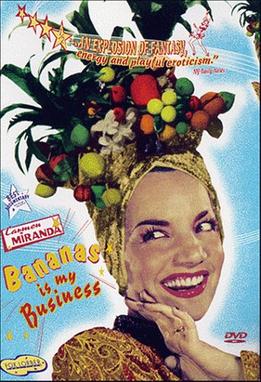
Along with the new name came a new icon: a singing banana modeled on Carmen Miranda, the “Brazilian Bombshell” and famous singer, whose signature fruit hats made her a Hollywood sensation. Together, they made Chiquita a household name.
But according to Bucheli, the company’s success also came with a dark side.
“In the first half of the 20th century, there were countries like Honduras that depended on banana exports for 80% of their economy,” said Bucheli. “Most of that went to the United States, and most of those exports were conducted by one single firm, which was United Fruit Company.” And the company worked tirelessly to maintain its virtual monopoly.
When workers in Colombia protested poor pay and working conditions, United Fruit lobbied the US government to send troops to help end the strike. And when Guatemala’s elected president, Jacobo Árbenz, began expropriating unused company land in the 50s, United Fruit hired a Madison Avenue agency to turn American sentiment against him. The clever PR campaign included booklets given to senators and a documentary film entitled “Why the Kremlin Hates Bananas.”
“The point was to show Guatemala as a beachhead of the Soviet Union in the Western Hemisphere, so they started selling the idea that Árbenz was a tool of the Soviets,” said Bucheli. The pitch worked, leading to a CIA-backed coup, approved by President Eisenhower, that replaced Árbenz with a military dictator and shelved agrarian reform.
The disease threatening the Cavendish
Then, however, came the problem that no amount of marketing could solve.
By the mid-1950s, the Gros Michel, or “Big Mike,” had become the dominant banana export in the northern hemisphere. But it had a weakness. The vast, monocultural plantations it grew on were susceptible to ground-borne pathogens. And in the mid 20th century, disaster struck, when a fungus called Panama Disease wiped out whole fields and sparked the need for a quick replacement.
The Cavendish, developed in England, fit the bill. While it was a little less sweet, the new strain was naturally resistant to the disease, which meant it could be planted in the same fields. It was also slightly smaller and easier to crate, making it ideal for global trade. But alas, a half century later, it seems that the popular fruit could be facing the same fate that befell Big Mike.
Since 1970, a new fungus, dubbed Tropical Race 4, has been racing around the globe, putting banana growers in a panic. And in 2019, it reached Latin America, putting some of the world’s largest banana-growing regions at risk.
Researchers are trying everything to solve the problem, including genetic modification to make the Cavendish immune to the new fungus. Even the International Atomic Energy Agency has gotten into the act, using gamma rays to zap banana seeds in an effort to speed the natural mutation process and create a hardier strain. But even if they succeed, their efforts could be foiled by global climate change, which could reduce suitable growing and export areas in Latin America and the Caribbean by as much as 60% by 2080.
That means the world’s leading scientists have nearly 55 years to solve the impending crisis. But that’s a long time for a product that spoils in a couple of days. So, while we all wait for the great banana-pocalypse to arrive, grab a banana and enjoy. It’s been a long and delicious run.