Generative AI models could help researchers use real-world patient data to identify promising treatments more quickly and potentially reduce the cost and time of clinical drug trials, while giving human experts a transparent way to validate AI’s reasoning.
The “gold standard” for testing new drugs is a randomized clinical trial. However, those trials can take years and cost millions of dollars before they secure FDA approval and bring the product to market.
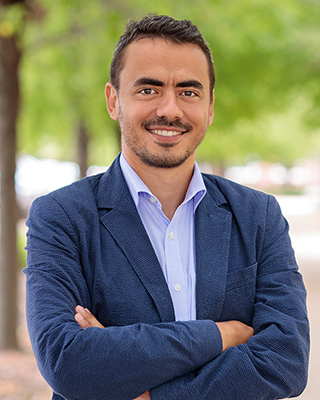
Eren Ahsen, assistant professor of business administration at Gies College of Business, found that generative AI can build structural causal models (SCMs) that perform on par with those created by humans when analyzing complex clinical data. In the study, the strongest AI-generated models matched the best human models overall and made fewer errors in predicting whether a treatment would help or harm patients. Because SCMs make the reasoning behind those estimates visible and testable, they could help researchers turn real-world patient data into more reliable evidence for evaluating treatments and making clinical decisions.
The results came from a student competition as part of the Midwest Healthcare Management Conference hosted each year by Gies Business at the Carle Illinois College of Medicine. The findings were released in a paper titled, ”Leveraging Generative AI for Interpretable Clinical Decision Making Through Causal Graphs”, which was published in Biocomputing 2026, as part of the Pacific Symposium on Biocomputing.
Finding causality without clinical trials
“With every model, we need to distinguish between causality and correlation,” Ahsen said. “If you want to develop a drug, you need to find a protein that might actually cause the disease. You build the models to help find that association, then develop a drug to target that protein and track if it actually affects the patient’s outcome.”
For the competition, teams used publicly available data from recent trials of glucocorticoid treatment of 2,000 hospitalized COVID-19 patients. Their baseline was the 28-day mortality rate of the patients. They used the SCMs to replicate findings using target trial emulation. In other words, since trials typically include about 100 participants, the models chose those 100 at random from the 2,000 patients in the database.
“If you carefully and accurately construct models to estimate the effect of treatment, then you have a chance to estimate those causal effects without randomized clinical trials,” Ahsen explained.
Those models are traditionally constructed by experts and seek to identify the important factors (such as age, disease, treatment, and survival) that may contribute to the success of the drug. The challenge, Ahsen said, is that because medical knowledge is growing so rapidly, those experts can’t expect to keep up with it. However, AI – specifically large-language models (LLMs) – can quickly read through the vast amounts of clinical and scientific research to identify new relevant factors and propose some causal relationships.
“LLMs can scan the literature that comes with the most up-to-date clinical network,” Ahsen said. “It’s different from a model that uses data and learns from it. It can take that model and translate that into a graph.”
Making AI more transparent
There were two aspects to the study: interpretability and performance, often referred to as LLMs’ “black box.” The results showed that AI doesn’t necessarily need to be a black box to construct plausible and accurate SCMs compared to the human-generated models.
In this exercise, SCM-based approaches in the AI experiments significantly outperformed traditional approaches, achieving 76-98 percent accuracy compared to just 1-37 percent from traditional potential-outcome approaches.
Because AI-generated LLMs can hallucinate, they need to be validated by human experts. However, the study shows that by expressing its reasoning through SCMs, AI systems can provide transparency in the results and build a bridge between AI and clinical experts. Instead of asking clinicians to simply trust the AI-produced results, the models give them a way to evaluate how they arrived at the conclusion.
Ahsen is an award-winning researcher and expert on how AI can work alongside human experts to improve clinical decisions. His work has included developing and evaluating AI approaches for breast cancer screening across a diverse patient population. Recently, he has studied how hospitals can divide mammography screening tasks between AI and radiologists, finding that AI can handle some cases efficiently while directing cases that require greater judgment to human experts, potentially reducing costs while maintaining patient safety.
According to Ahsen, the next step for drug trials is to combine the two approaches – AI and humans.
“In this study, we only validated the network,” Ahsen said. “Can we show that by combining the two approaches, it can be stronger than the two alone? In that scenario, you have a model that generates data and a human that validates.”
Ahsen notes that in general, 90 percent of the trials are unsuccessful, costing drug companies billions of dollars each year. However, SCM analyses, such as the one in this study, can generate more plausible targets for trials, which could increase the success rate considerably.
“This gives us some hope that there is something that is learned by those LLM models,” Ahsen said. “We chose this dataset because we had both observational and clinical trial data. Ideally, you can apply this approach to cancer or other diseases as well.”