Research from Gies College of Business finds that firms that engage employees in environmental goals and plan for long term climate risks tend to outperform peers. Those efforts, however, only pay off when they are built on strong measurement and disclosure practices.
Measurement and disclosure may be the least exciting parts of a
carbon management strategy, but they may also be the most important. A study
from Gies College of Business categorized a dozen carbon management practices
into three clear "bundles" and revealed which bundles were associated
with stronger financial performance. Their analysis showed that measurement and
disclosure form the foundation of a successful carbon management program.
“We were first surprised to find that the measurement and
disclosure bundle was not significant,” said Anand. “So, we decided to dive
deeper. When you talk to people who do this on a day-to-day basis, they'll tell
you that some things are the baseline; you must do them. Measurement and
disclosure aren't going to give you a big bump in performance by themselves.
But if you don't do them, you're not going to get the benefit of the other
practices.”
Three Bundles of Practices

In “Carbon
Management Practices and Associations with Firm Performance”,
published in the Journal
of Environmental Management, Gopesh Anand
and Ramanath
Subramanyam of Gies Business collaborated with coauthor Anqi Wu (Florida
International University) to analyze seven years of data from S&P 500 firms
and identify which carbon management practices are linked to better firm-level
outcomes. This study was part of Wu's doctoral dissertation work in the Department
of Business Administration at Gies Business.
“If you tell companies that they need to pay attention to
environmental impact, it's hard to convince them with a whole long list of
practices,” said Anand, Professor of Business Administration and William N.
Scheffel Faculty Scholar. “So, we clustered the practices into fewer practice
bundles. That allowed us to look for patterns in how those bundles relate to
performance. The intention was to be able to tell companies, ‘This is where you
need to focus your time and resources.’”
Drawing on the natural-resource-based view of the firm, which
holds that competitive advantage can arise from how firms manage their
relationships with the natural environment, the researchers organized the
practices into three bundles. The first, employee engagement, captures how a
firm incentivizes its workers to participate in environmental goals. The
second, long-term orientation, signals how well the firm anticipates and
identifies long-term risks. The third, measurement and disclosure, is what the
term "ESG" might bring to mind: target setting, emissions and
pollutant reporting, and disclosing impact data.
The researchers built a dataset from the Carbon Disclosure Project (CDP), a global
reporting system through which firms document sustainability efforts. They
analyzed data from 312 companies from 2011 to 2017, validating their
three-bundle framework and linking these bundles to firm financial performance
data. Wu, the lead author of the study, led much of the painstaking data work,
including navigating the CDP's data structure and constructing the controls
that enabled the team to draw confident conclusions.

“We know about this from a few years back,” said Subramanyam (right),
Professor of Business Administration and William N. Scheffel Faculty Scholar.
“Companies hear a lot of different guidance about how to do well for the
environment. We realized that this data offered us an opportunity to identify
the clusters, or bundles, of practices that firms could use to succeed. Some
are straightforward, such as compliance with rules, while others are for
proactively making the right environmental choice. Some are for preventing
future litigation—things like that.”
The results showed that two of the three bundles, employee
engagement and long-term orientation, were both associated with higher firm
performance as estimated by return on assets (ROA, a measure of profitability)
and Tobin's Q (the ratio of an asset's market value to its replacement cost).
Firms that engaged employees and took a long-term view toward climate risk
outperformed their peers. The third bundle, measurement and disclosure,
however, was not directly associated with stronger financial performance.
Instead, the team found that it served as the backbone supporting everything
else.
You Can't Manage What You Can't Measure
The researchers used a constraining factor model to determine
that the third bundle, measurement and disclosure, acts as a kind of
bottleneck. When a firm's measurement and disclosure practices lag behind the
other two bundles, the positive effects of employee engagement and long-term
orientation disappear entirely.
For Anand, the finding resembles a familiar concept from
operations management: the difference between order qualifiers and order
winners. In that view, the measurement and disclosure bundle is a qualifier – a
foundation that won't do much on its own but without which nothing else works
quite right.
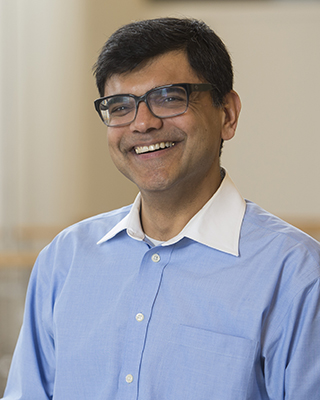
“We're telling companies that measurement and disclosure are
where you start,” said Anand (right). “It's the minimum. If you're not doing
measurement and disclosure, you won't be able to engage employees. You're not
going to have a long-term view. We're saying, ‘You need to do that first.’
Without it, don't even try anything else.”
For Subramanyam, the research points to a broader principle.
“We kept thinking about the well-known quote [attributed to Peter
Drucker] that you cannot manage what you cannot measure,” said Subramanyam.
“Our results tell us there's truth to that. The more you track performance,
prioritize transparency, and measure, the more you have a reliable baseline to
return to. When you wonder whether incentives are working, you can always go
back to the measurement process and verify. It's a reliable cross-check.”
Good Business for a Good Planet
These findings arrive during a moment of change for corporate
sustainability. Shifting regulatory environments, policy landscapes, and media
attention all affect climate and sustainability discourse. But for Anand, one
takeaway is that the data suggest doing good for the environment can also be
good for business.
“It's also heartening to see that companies that are paying
attention to the environment end up getting rewarded by the stock market,” said
Anand. “A lot of companies are doubtful about spending their time and effort in
this pursuit. What we see is that if done the right way, the stock market will
also reward you for your efforts.”
The researchers were also heartened to see the benefits of
engaging employees.
“You can make them partners,” said Subramanyam. “All of your
employees are partners in your mission. Get them engaged, give them incentives.
Everybody's better off, and the environment is better off."