Gies Business is driving a new initiative to transform rural healthcare delivery in Illinois, using its expertise in data analytics and healthcare innovation to create a scalable solution for communities that lack adequate access to primary care.
 By Lisa Wells
Gies College of Business is driving a new initiative to transform rural healthcare delivery in Illinois, using its expertise in data analytics and healthcare innovation to create a scalable solution for communities that lack adequate access to primary care.
The College is partnering with Carle Illinois College of Medicine, OSF HealthCare, and Tata Elxsi to launch a network of digital health kiosks, a low-cost first point-of-contact for people who live in remote areas.
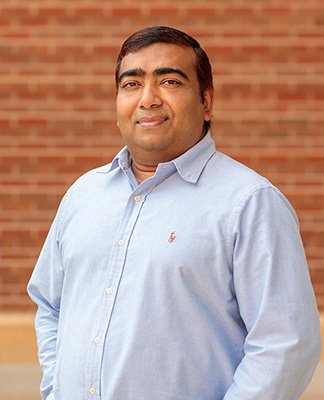
“For people in remote and underserved areas, basic healthcare often means long travel or no care at all,” said Ujjal Kumar Mukherjee, associate professor of business administration at Gies Business. "This network is going to improve quality, it's going to expand primary care access, and it's going to reduce costs."
Mukherjee explained that for too long the US healthcare system has operated on a curative-driven model, leading to overcrowded emergency rooms and skyrocketing costs.
Analyzing OSF data, Mukherjee and his research team found that a disproportionately large share of uninsured, underinsured, and remote rural patients visit the hospital emergency room for low-triage events that could have been handled by a general practitioner or urgent care facility.
The data also revealed that the continuum of care breaks down quickly in rural areas, resulting in poor outcomes and high ER readmission rates for heart failure patients.
“Our data revealed that rural patients don’t seek preventative care and do not do the necessary acute follow-up care that can prevent a recurrence,” said Mukherjee, who added the root cause is a lack of geographic or financial access to primary care.
The Gies solution: Data-driven accessibility
Gies Business is driving the project’s data analytics – identifying key rural healthcare needs through county-specific data. This approach led to the development of a hub-and-spoke business model with the kiosk acting as a “far-reaching spoke.”
Mukherjee’s team reviewed patient activity over a 10-year period and found that proximity is a key motivator for patients to seek care.
“If a clinic is within 5 miles, they will make the trip, but if it’s further away – 10-to-15 miles away from home – they will not,” he said. “We need to get nearer to the patients earlier along the healthcare continuum.”
The new kiosks are designed to close this access gap, focusing on overall healthcare delivery cost reduction, not revenue generation. The kiosks will be operated by community health workers who check vital signs, conduct preventative screenings, and facilitate follow-up care. They will feature capabilities like integrated EKGs, pulse oximeters, and patient questionnaires. Future sites could include Illinois Extension offices, retailers, community centers, and churches. Patients will not be charged for this service because the reduction in cost of emergency care will pay for itself.
The impact of this approach is significant, according to Mukherjee. Data analysis showed that when OSF opened or acquired new clinics in rural areas, the number of patients seeking emergency care – especially at low triage levels – dropped significantly.
“This business model eases crowding at the ER so that they can focus on true emergencies,” said Mukherjee, who is also a scholar with the Health Care Research Initiative at Gies Business.
OSF is funding the initiative, which will roll out to 23 districts across Illinois over three years. In 2026, the team will install and implement five kiosks to collect data, fine-tune, and scale the initiative. Mukherjee said the next key will be integrating information from the kiosks and clinics into the hospital’s electronic medical record (EMR) system.
The business of healthcare innovation
Gies Business has quickly established itself as an innovator in the business of healthcare. In addition to supporting interdisciplinary appointments with the Carle Illinois College of Medicine and establishing and funding the Midwest Healthcare Management Conference since 2019, Gies Business is developing a Healthcare Innovation, Design, and Entrepreneurship (HIDE) focus area and this Fall introduced a graduate-level course on the Healthcare Innovation Process (MBA 572).
During the pandemic, Mukherjee applied his data analytics and supply chain expertise to the University’s SHIELD team, which focused on rapid testing and community outreach. They then began thinking about how to apply the hub-and-spoke model they created to general healthcare delivery.
This idea for the kiosk initiative took shape after a 2022 Midwest Healthcare Management Conference, organized by Gies Business and Carle Illinois College of Medicine, brought together policymakers and providers to discuss systemic challenges in healthcare delivery.
“When it comes to the business of healthcare, profit maximization cannot be the only goal because it also has an educational and community component to it,” said Mukherjee. “While pharmaceutical and medical device companies are profit maximizers, hospitals and clinics must strive for a combination of social welfare and financial sustainability.”